Navy HallDoors Open Niagara-on-the-Lake
- National Historic Site (Canada)
- Veterans/Military heritage
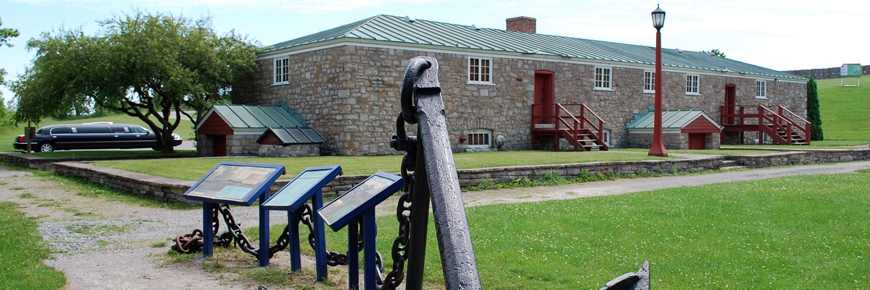
In 1765, British naval craftsmen began erecting buildings that would come to be known as Navy Hall, a key supply facility for British forts on the upper Great Lakes. In 1792, Lieutenant Governor Simcoe converted a building into his residence, which later served as an officers' dining hall. After the War of 1812, the British rebuilt some buildings, one of which one survives today.
In 1765, British naval craftsmen from Fort Niagara erected a barracks on the opposite side of the Niagara River. Over the years, several buildings – known collectively as Navy Hall – evolved into a key military supply facility for British forts on the upper Great Lakes. During the American Revolution, the Provincial Marine wintered at Navy Hall and, in 1792, Lieutenant Governor John Graves Simcoe converted one of the buildings into his residence. The Lieutenant Governor's home in the first capital of the Province of Upper Canada later served as a dining hall for the officers at Fort George. Navy Hall was destroyed by American forces during the War of 1812. After the war, the British rebuilt some of the buildings, of which one still survives today. As part of Digital Doors Open, you can learn more about this site’s remarkable history through the video below.
Contact info
305 Ricardo StreetNiagara-on-the-Lake, Ontario
https://www.pc.gc.ca/en/lhn-nhs/on/fortgeorge/culture/navyhall
Architecture
Year built: c. 1815Building type:Historical landmarkMilitary
Dates/hours open
Oct 17, 10:00am - Oct 17, 05:00pmSaturday: 10 a.m. to 5 p.m.