
Sites
Filter sites by:(add a filter)
Doors Open Ontario presenting sponsor
Doors Open Ontario presenting sponsor
Niagara Falls
About our communities: Drummondville
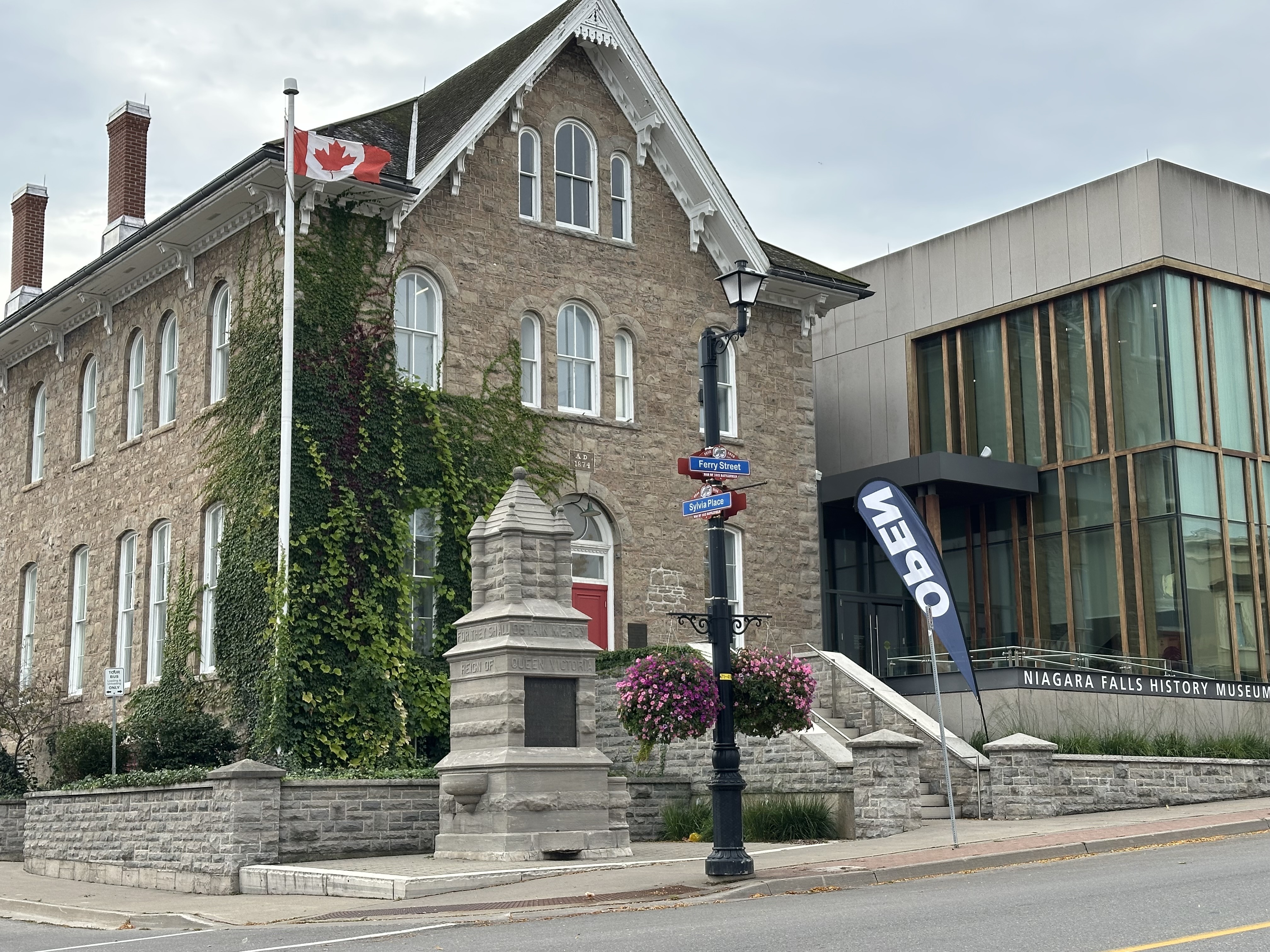
HISTORIC DRUMMONDVILLE
Drummondville was named after Major General Gordon Drummond, who commanded in the 1814 Battle of Lundy’s Lane. Drummondville grew around the battlefield and in 1831 was the first village in Stamford Township to incorporate.
The village boundary lies between North Street, Stanley Ave, Dixon Street and Drummond Road with Main Street and Ferry Street serving as the main district. There were several taverns, a hotel, tannery, a large brewery and 5 churches. Robust tourism to the battlefield was second only to the falls. A number of observation towers were built overlooking the battle field.
In 1841, the Forsyth House on Main Street was the home of Lord Elgin, Governor General of Canada, and he worked and ran cabinet meetings in the Prospect House. He played a foundational role in Canadian democracy.
Located in Drummondville, Stamford Town Hall was built in 1874 using hammer-dressed limestone with Italianate architecture. The architect, John Latshaw, known for introducing Greek Revival to Ontario, lived in Drummondville. He is also well known for the Willowbank residence in Niagara-on-the-Lake, Clifton Town Hall and the Welland House Hotel.
Stamford Town Hall served as the township municipal government for 89 years until it became part of Niagara Falls in 1963. This historic building on Ferry Street now houses the Niagara Falls History Museum.
About our communities: Stamford
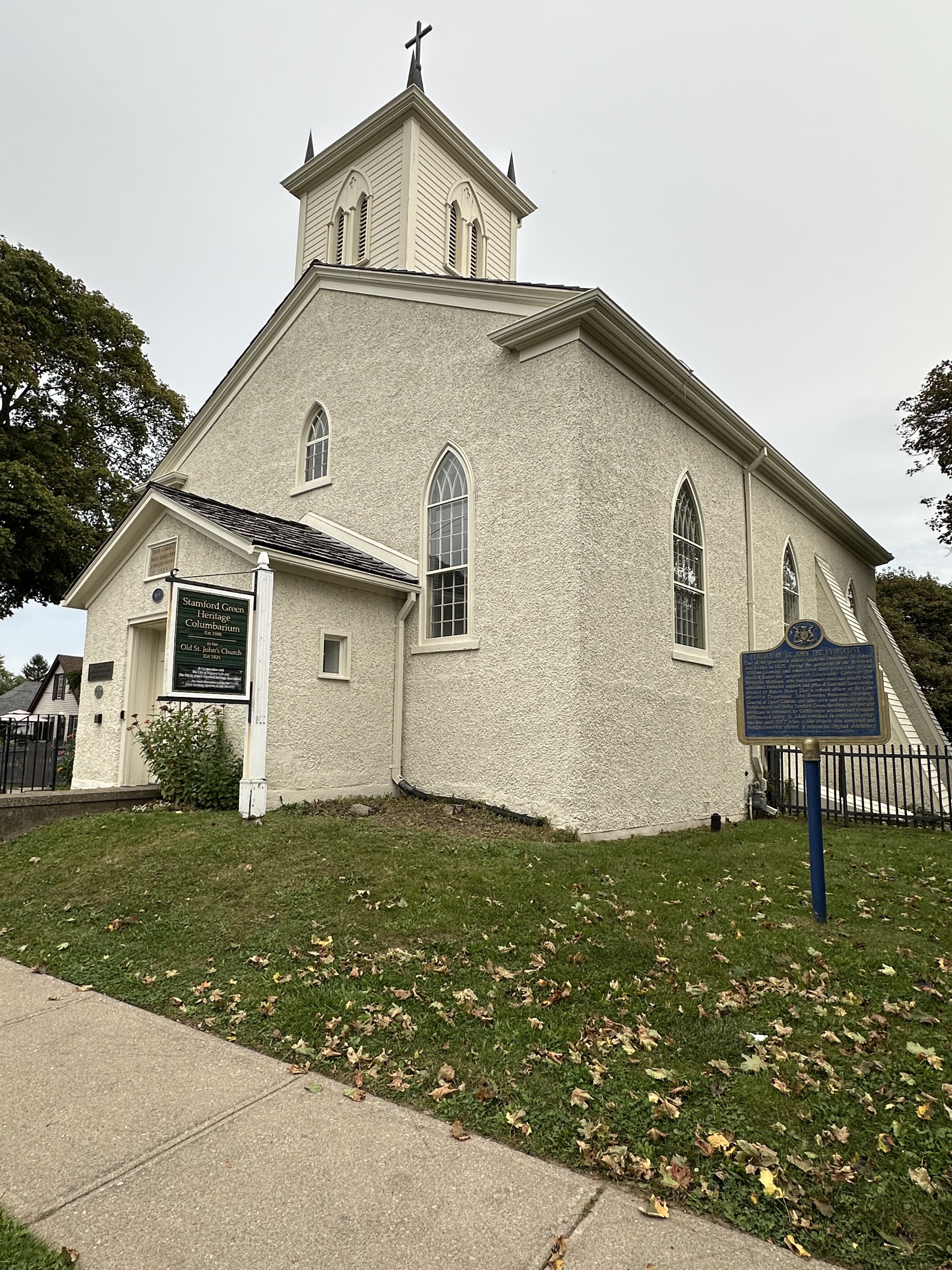
HISTORIC STAMFORD
First named Mount Dorchester, or Township no. 2, Stamford was first settled in 1784 by United Empire Loyalists and other members of Butler’s Rangers. It was renamed Stamford by first Lieutenant Governor of Upper Canada, John Graves Simcoe, in 1782.
Stamford Village, now known as Historic Stamford, and Drumondville were the primary settlements in Stamford.
From Queenston to Chippawa and passing through Stamford, the Portage Road was an important trade route in the province from 1782 to 1829 before the opening of the first Welland Canal.
Stamford Village was the largest village in the township, established around 1783. Soon a government meeting house was erected in 1787, which became the Stamford Presbyterian Church, the first Presbyterian Church in Upper Canada, and the first to be built by public subscription.
Alluvial soils in Stamford permitted initial crops such as barley, oats, and wheat and then were transitioned to more lucrative tender fruits like peaches, pears and grapes. Viticulture in Stamford laid the foundation for Niagara Region wines.
Also found in Stamford Village, wedged between Portage Road and St. Paul Ave, is an English-style village green space known as Stamford Green, which is the only village green in Canada.
Adjacent to Stamford Green is Old St. John’s Anglican Church built in 1826 with stucco on brick, Regency Gothic windows and a Norman-style tower. It served as a significant landmark along the Portage Road and is the oldest church in the Niagara Region.